BlueBatch
  • How it works
  • Your customers
  • Your crew
  • Who it's for
0481 810 600Book a check

For small seafood processors, from the water to the customer

Log the work.
The proof writes itself.

The operations and food safety system for small seafood processors.

  • Your crew records on a phone or the shed iPad, as they work.
  • Stock, orders, dispatch and invoices sit in one place.
  • Your auditor gets the whole trace in under a minute.
  • Your customers scan a pack and see where it came from.
Book a free traceability checkSee what your customer sees

Built on a Tasmanian processing floor. Set up today for sea urchin and oysters.

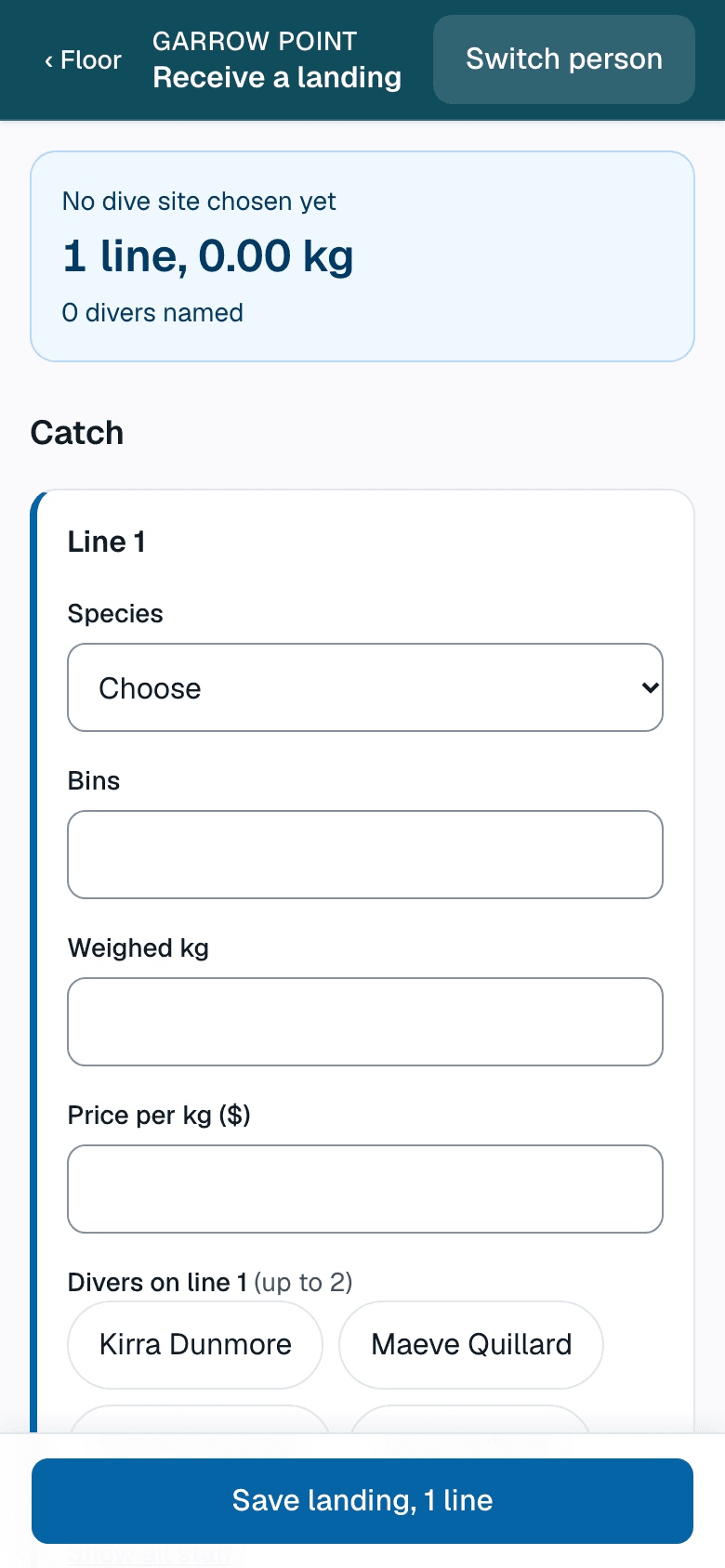
The receival form on a phone: the landing, its weights, the area status and the temperature check

Why it is different

The paperwork you already have to do, turned into the reason people buy from you.

Every check, weight and reading is recorded once, by the person who did it, as the work happens. That one record comes out three ways.

For your auditor

The trace, the records behind it, and who signed what.

Limits carry the clause they come from. Corrective actions open on their own. A second person verifies. Nothing is edited after the fact. The auditor signs in, read only, and reads it the way they already read a plan.
For your customers

A QR code on every pack that opens its story.

The buyer, the chef and the diner scan it and see the lease or dive site, the harvest day and the pack day. In your colours, with your story, from your own records.

For you

A quiet audit, hours back, and your yield in plain sight.

No evening re-typing. The dashboard shows what is due today, what was missed and what breached, before the auditor does. Yield by source, week on week.

Today

One lot touches six tools, and someone re-types it between each.

Each tool does its one job. None of them knows about the lot. So the lot is written down again at every handover, and the audit is the day you find out which copy was wrong.

The clipboard

Temperatures and checks on wet paper, read by nobody until something goes wrong.

With BlueBatch. Recorded on the floor, by the person who did it, judged against the limit as it is entered.

The whiteboard

Today's lots and orders, wiped tomorrow morning.

With BlueBatch. Stock by lot and place, kept, with what is due today at the top.

The phone

Orders by text, email and messaging apps, in three inboxes.

With BlueBatch. Orders in one list, packed from the oldest stock first, with lot and use-by on every carton.

The logger's own app

A warm cool room found the next morning, in an app nobody opens.

With BlueBatch. A reading out of range opens a corrective action on its own and lands on the manager's dashboard.

How it works

Six steps. Compliance as a by-product of the work, not a second job.

Step 1

Receive

Log the landing on the phone: species, weights, who caught or grew it, where, and the checks your plan requires. The area's status is checked before the landing is accepted.

Step 2

Process and pack

Batches, units and cartons carry the lot. Labels print with species, lot, area, dates, net weight and the QR code. The use-by comes from the lot, not a guess.

Step 3

Take orders

Customers order from today's availability on their own phone, or you enter it for them. Every order sits in one list against the stock you actually have.

One carton's journey

Every carton knows which landing it came from.

Tap a step to see the record it leaves behind. Then run the recall.

The record it leaves

Receival

Who caught or grew it, which area, whether the area was open, and how cold it was when it landed. Checked against your limit as it is entered, by the person who did it.

From
Mara Holloway, dive licence D-0417
Area
East coast, block 4, open
Received
29 Oct, 6:42am
Temperature
4.1°C, limit 5°C
Recorded by
Tom Reilly
Verified by
Lena Marsh

Sample records from a demo tenant. People and businesses are invented.

Your customers

Your customers and their orders live where your stock lives.

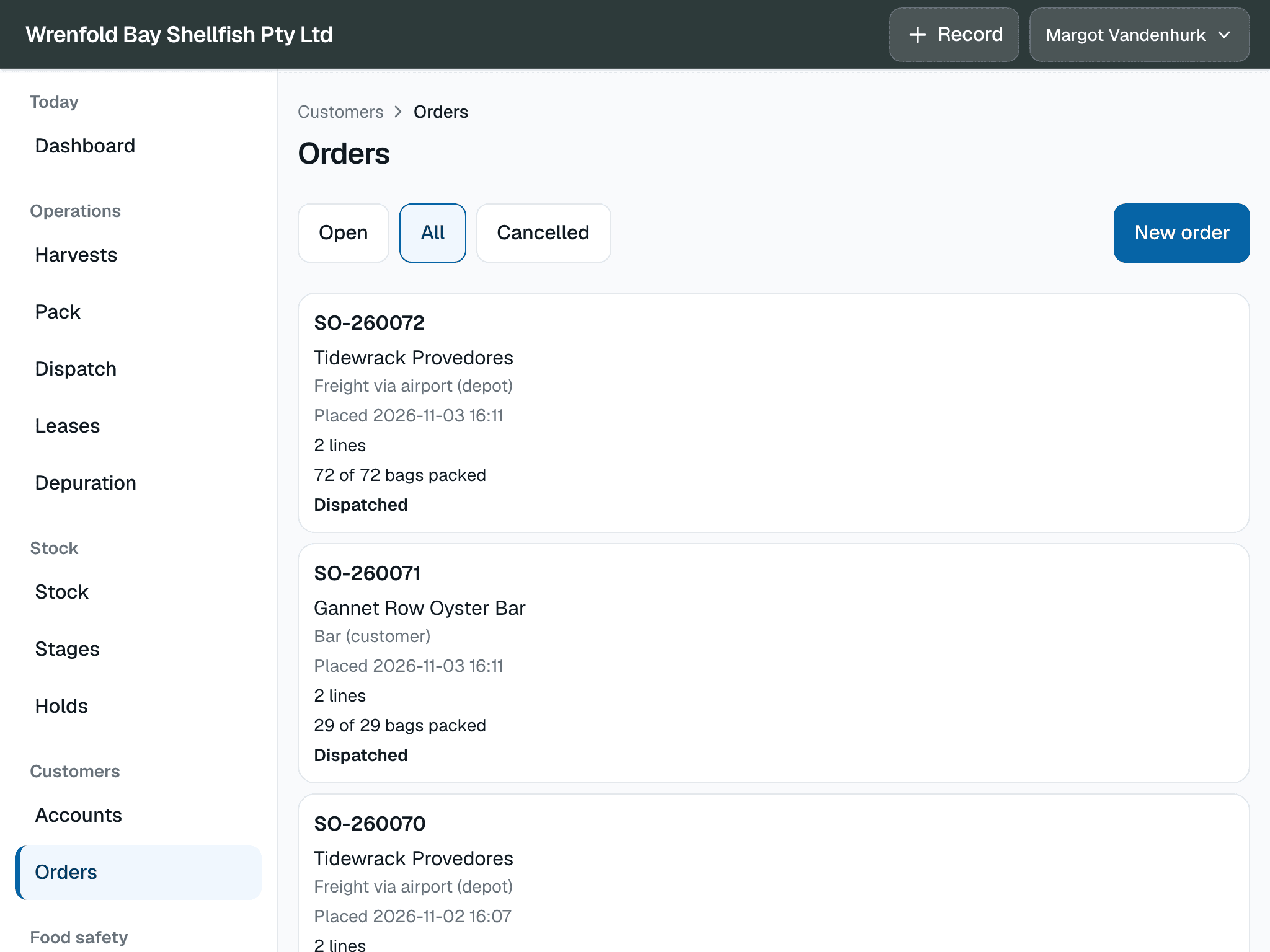
Each customer has a page: orders, addresses, contacts and notes. They order from today's availability on their own phone, or you enter it for them. Packing takes the oldest stock first, so every carton leaves with the right lot and use-by on it. They can follow the order and confirm receipt.

  • Orders from text, email and messaging apps, in one list.
  • Stock, orders, packing and dispatch on the one screen.
  • An invoice drafted from each consignment, with the lot on the line.

Next: invoices sent to Xero as drafts, and price lists per customer.

The orders list on an iPad: today's orders by customer with their status and the packing queue

What your customer sees

Compliance, working as your marketing.

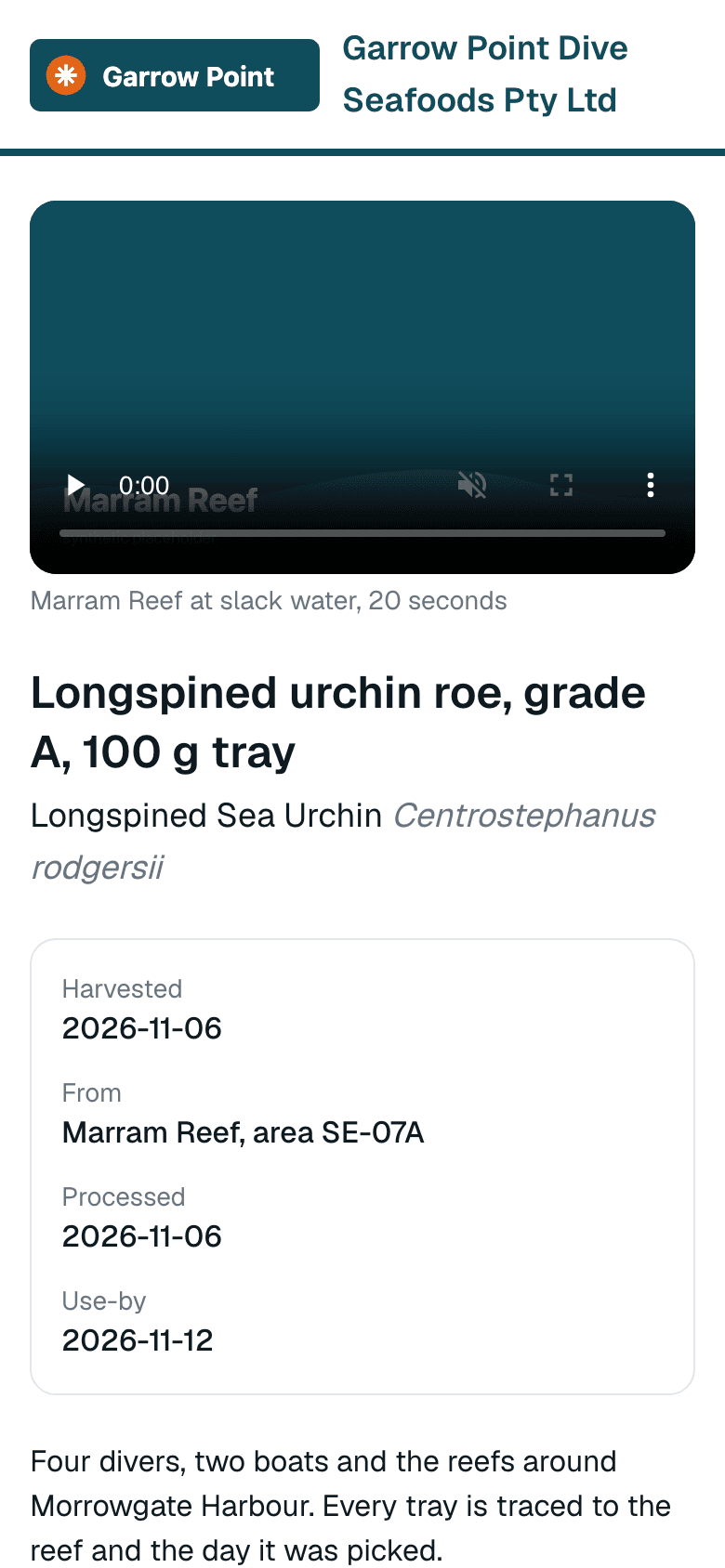
The records you keep for the auditor are the provenance your customers are asking for. A QR code on every pack opens a page in your colours, with your logo and your story: which lease or dive site, who harvested it, and the day it was packed. Wholesale buyers see the lot. Chefs put it on the menu. Diners scan it at the table.

  • A page per lot and a page per source: a lease, a dive site, a boat.
  • Your brand colours, logo, story, photos and video, edited by you.
  • First names shown only for crew who have agreed.
  • On or off, per business. You see how often each page is opened.
A demo lot's public page on a phone: the business's colours and story, the dive site, the harvest and pack days
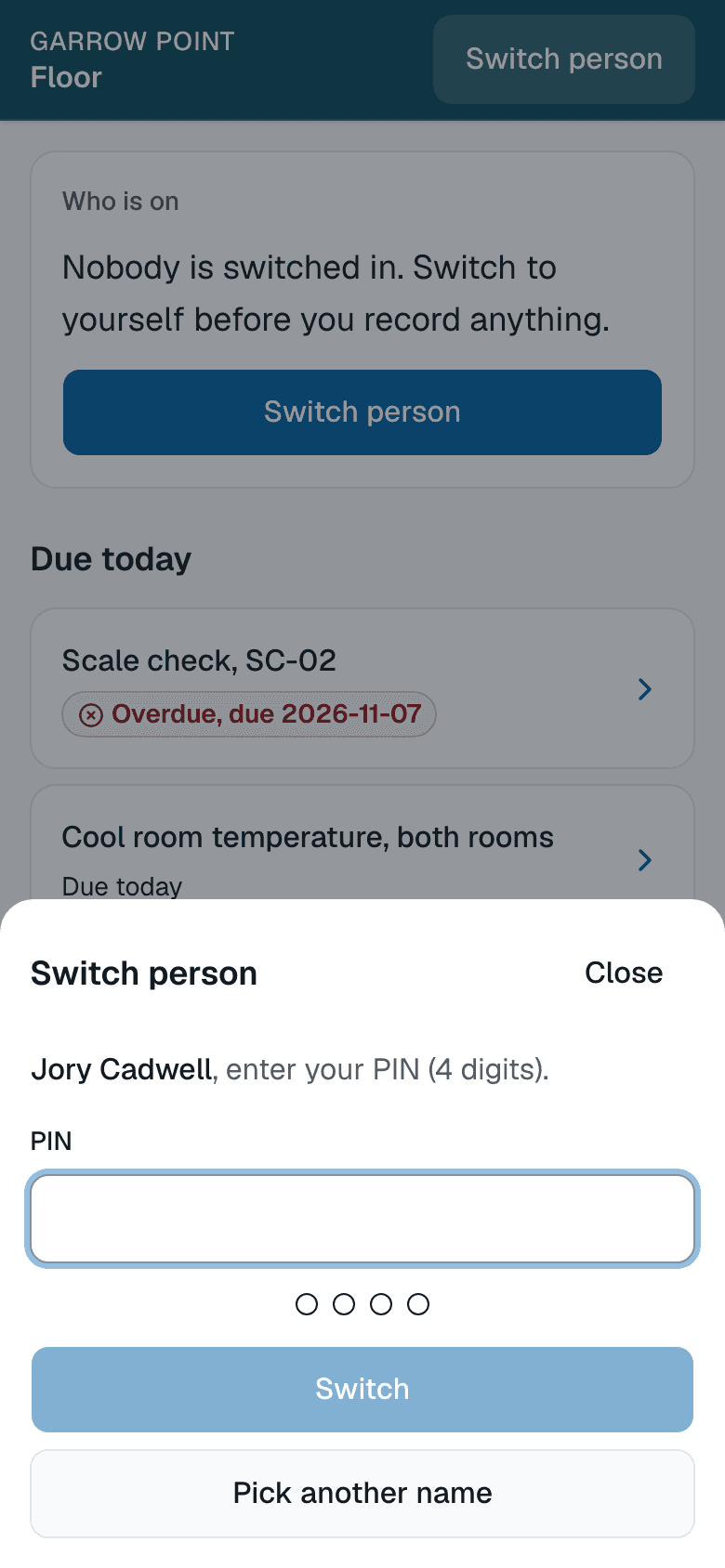
The shared floor device: choose your name, then enter your personal PIN

Your crew

On the phone they already carry, or the one iPad on the bench.

Each person has their own sign-in with the access their role allows, or the shed shares one iPad and each person enters their personal PIN before they record. Either way, the record carries who did it, because they were the one signed in. Big buttons, wet hands, photos from the camera, and sign-out when the phone is left idle.

  • The cleaner sees the cleaning forms. The packer sees packing. The manager sees everything.
  • Roles are yours to name, with limits you set.
  • What is due today sits at the top of each person's screen.
  • The auditor gets a read-only sign-in for as long as you allow.

Your food safety plan

The plan, followed the way the auditor reads it.

Most findings are not bad practice. They are a check that was forgotten, a limit nobody wrote down, or a fail that was never followed up. BlueBatch is built so those three cannot quietly happen. We sit with auditors to learn where small processors get caught, and build the check that catches it first.

Limits with their clause

Every limit carries the clause and plan version it comes from. A reading is judged as it is entered: monitored, or refused.

A fail cannot disappear

A breach, a failed check or a logger out of range opens a corrective action on its own, with photos on raise and close.

A second pair of eyes

The checks your plan says are verified go to a queue for someone other than the person who recorded them.

Nothing forgotten

Swabs, calibration, cleaning, the monthly review and expiring licences sit on the manager's dashboard as due, overdue or breached.

Your business, your way

Know your business

The numbers you never had time to work out.

Because every weight, price and reading is already captured, the reports are a by-product too. Seven pages, each number opening the rows behind it, with highlights when something moves.

Yield, last 7 days9.5%Pellow Point bommies, level with the 4 weeks before

By source and by harvest. You see which lease or dive site is paying.

Cool room checks on time100%34 of 34 in the last 4 weeks

The audit, every day, before the auditor.

Illustrative figures from a demo tenant.

Who it's for

Set up for how your species is handled.

Set up today for sea urchin and oysters, farmed or wild. Abalone, rock lobster and finfish are next, and we are talking to processors in those fisheries now.

Available now

Oysters and mussels

Area status checked before the harvest is accepted, the harvest record inside 24 hours, the tag with the lease on it, from the phone on the lease.

Available now

Sea urchin and dive fisheries

Closure status checked at receival, receival temperatures and yield by source, in one place.

Next, with a design partner

Abalone and rock lobster

Dockets, live holding and the export records kept the way the DAFF assessor reads them.

Next, with a design partner

Finfish wholesale

Receival temperatures, standard fish names on every document, and yield by species without a spreadsheet.

Who builds it

Built on a Tasmanian processing floor.

Aquatrace is built by Simon de Moor, based in Tasmania, from a working system in a Tasmanian processing shed. We start with how your business works, not with the software. Your data is yours, and exports as spreadsheets any day you ask.

Free traceability check

Could you trace one lot to every customer in ten minutes?

We sit with you for 30 minutes, walk one lot from receival to dispatch, and you keep the gap list whether or not you buy.

Or call Simon

0481 810 600Text Simon

Usually answers the same day. Best to text first.

Or download the seafood rules on one page (four printable sheets)
What you handle

We use these details only to get back to you.

BlueBatch. Made in Tasmania. Tasmania.The seafood rules on one pageSign in

The 9pm spreadsheet

The day typed up twice: once for the pack list, once for the invoice.

With BlueBatch. The pack list and the invoice come from the consignment. Nothing is typed twice.

The audit binder

A mock recall that takes an afternoon, and hoping the auditor does not ask for that lot.

With BlueBatch. Any carton traced back to the landing and forward to the customer in a minute, then printed.

Step 4

Dispatch and invoice

Pack from the oldest stock first, build the run, record the temperature and the checks, print the pack list. The invoice is drafted from the consignment with the lot on the line.

Step 5

Prove it

Your auditor signs in, read only, and sees the trace, the records behind it and who signed what. A mock recall is a button, not an afternoon.

Step 6

Show it

Every pack carries a QR code. Your customers scan it and see the same record, in plain words, in your colours.

Your forms, limits, schedules, labels and even the words on the screen are settings, not code. You change them yourself, every change is kept with a note, and any version can be restored.

Records you can stand behind

Records cannot be edited after the fact. A correction is a new record that points at the original, with who and when. The integrity page states exactly what the database enforces, checked when it opens.